Our Archery Coaching Methodology — Built on Three Layers That Most Programs Only Teach One Of
Physical Foundation. Mental Execution. Competitive Application.
Sarasota Archery Academy’s coaching approach fuses USA Archery’s National Training System with advanced shot process training and competition-specific mental performance development. The result is an athlete who can build a technically correct shot — and execute it under pressure when it matters.
SAA coaches through three integrated layers: (1) USA Archery NTS biomechanics — the 11-position shot sequence that drives the shot from the back muscles; (2) shot process and subconscious execution training — pre-shot routine, blank bale work, and target panic remediation; (3) competition-specific mental performance preparation. Most programs only teach the first layer. Lead coaches Rob Gilbert and Chad Henderson are USA Archery Level 3 NTS certified.
Why Most Archery Programs Produce Archers Who Practice Well and Compete Poorly
The most common failure mode in competitive archery development is this: an archer builds technically correct form in practice, shoots well in comfortable conditions, and then falls apart under tournament pressure. The score drops. The groups open up. The mental game collapses. Coaches who observe this often diagnose it as a form problem and prescribe more form work. They are usually wrong. The form is fine. What’s missing is the layer of training that prepares the mind to execute form reliably when the stakes are real.
At Sarasota Archery Academy, we coach three distinct layers simultaneously — because all three must be developed together for an athlete to compete at a high level. An athlete with perfect form and no mental process is a practice shooter. An athlete with a great mental framework and poor form is inconsistent. An athlete with both but no competition-specific preparation is unprepared for what tournaments actually demand. Our methodology addresses all three — and the integration of all three is what produces competitive athletes rather than recreational shooters who occasionally enter contests.
This page explains how we think about coaching, why each layer matters, and what the training looks like at each level. It is written for families evaluating programs and for athletes who want to understand what serious archery development actually requires.
The Physical Foundation — USA Archery’s National Training System (NTS)
Every athlete at Sarasota Archery Academy is built from the ground up on the USA Archery National Training System (NTS) — the biomechanics-based coaching framework developed for USA Archery’s national team and Olympic development pipeline. NTS is not a style preference or a coaching opinion. It is a structured, evidence-based sequence of eleven physical positions and movements that, when executed correctly, produce a mechanically consistent, repeatable shot from any archer — regardless of age, size, or experience level.
Our head coach, Rob Gilbert, holds a USA Archery Level 3 NTS certification — the highest coaching credential in the sport. Level 3 NTS coaches are equipped not only to teach the system but to diagnose breakdowns at any position in the sequence and prescribe targeted corrections. This is a meaningfully different capability from a Level 1 coach who knows the basics or a well-intentioned volunteer who learned from watching videos. The diagnostic depth matters enormously in youth development — catching a bad habit early takes days; unlearning one that’s been reinforced for years can take an entire season.
The 11 Positions of the NTS Shot Sequence
NTS breaks the archery shot into eleven discrete, teachable positions. Each position has specific body mechanics, muscle engagement patterns, and observable checkpoints that coaches use to assess and correct. The eleven positions are:
The NTS philosophy is fundamentally about using the body’s largest, strongest, and most fatigue-resistant muscles — the back muscles — as the primary driver of the shot, rather than the arms. An arm-driven shot is inherently inconsistent because small arm muscles fatigue quickly and are subject to adrenaline-induced tremor under pressure. A back-driven shot is significantly more stable because large muscle groups fatigue slowly and are less reactive to adrenaline. This is why NTS-trained archers typically hold their performance better in tournaments than archers who trained without it — their form is physically designed to be pressure-resistant.
We apply NTS to both USA Archery target disciplines and, with appropriate adaptations, to ASA 3D archery. The biomechanical principles transfer across disciplines. An athlete who owns their NTS shot sequence can apply that foundation to any format.
The Mental Execution Layer — Shot Process Training and Subconscious Performance
Physical form is necessary but not sufficient. The moment an athlete enters a tournament and a score is attached to every arrow, a different set of demands activates — ones that form alone cannot address. This is where shot process training becomes the critical differentiator between an athlete who practices well and one who competes well.
Shot process training is the discipline of establishing a defined, consistent mental and physical sequence for every arrow — independent of the score, the audience, the wind, the equipment, or the competitive stakes. The goal is a shot that runs the same way on arrow sixty of a perfect tournament round as it does on arrow one of a blank-bale practice session. Not similar. The same.
This requires training the subconscious — specifically, training the subconscious to own the execution of the shot while the conscious mind handles the aim. Archery’s most enduring coaching challenge is what happens when the conscious mind attempts to control the release: it can’t do it reliably. The conscious mind is too slow, too variable, and too reactive to adrenaline. An archer who consciously “tries to release cleanly” will shoot inconsistently under pressure because they are asking the wrong system to do the work. The release must be executed by a trained subconscious process triggered at the right moment — not commanded by conscious intention.
What We Train in the Mental Layer
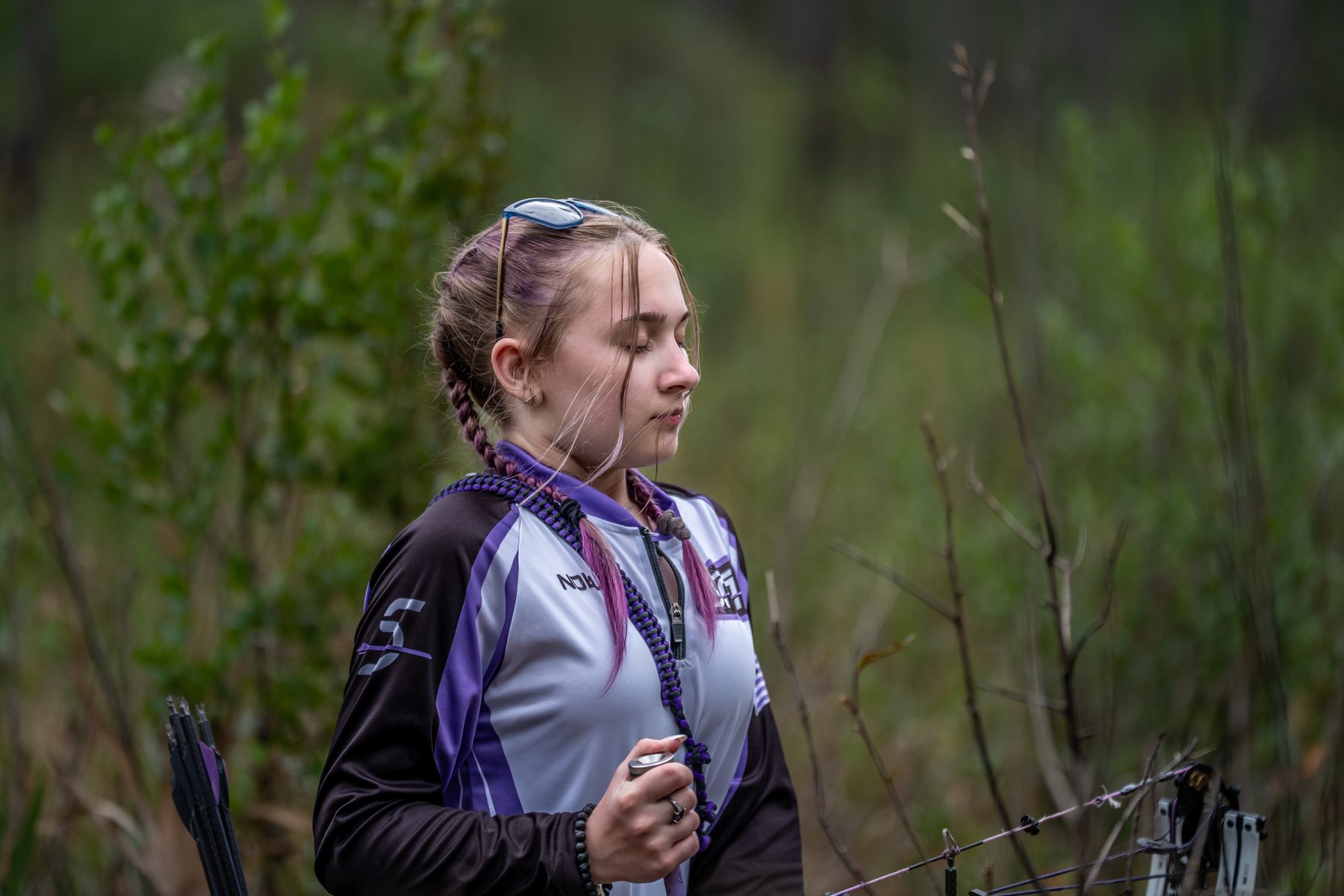
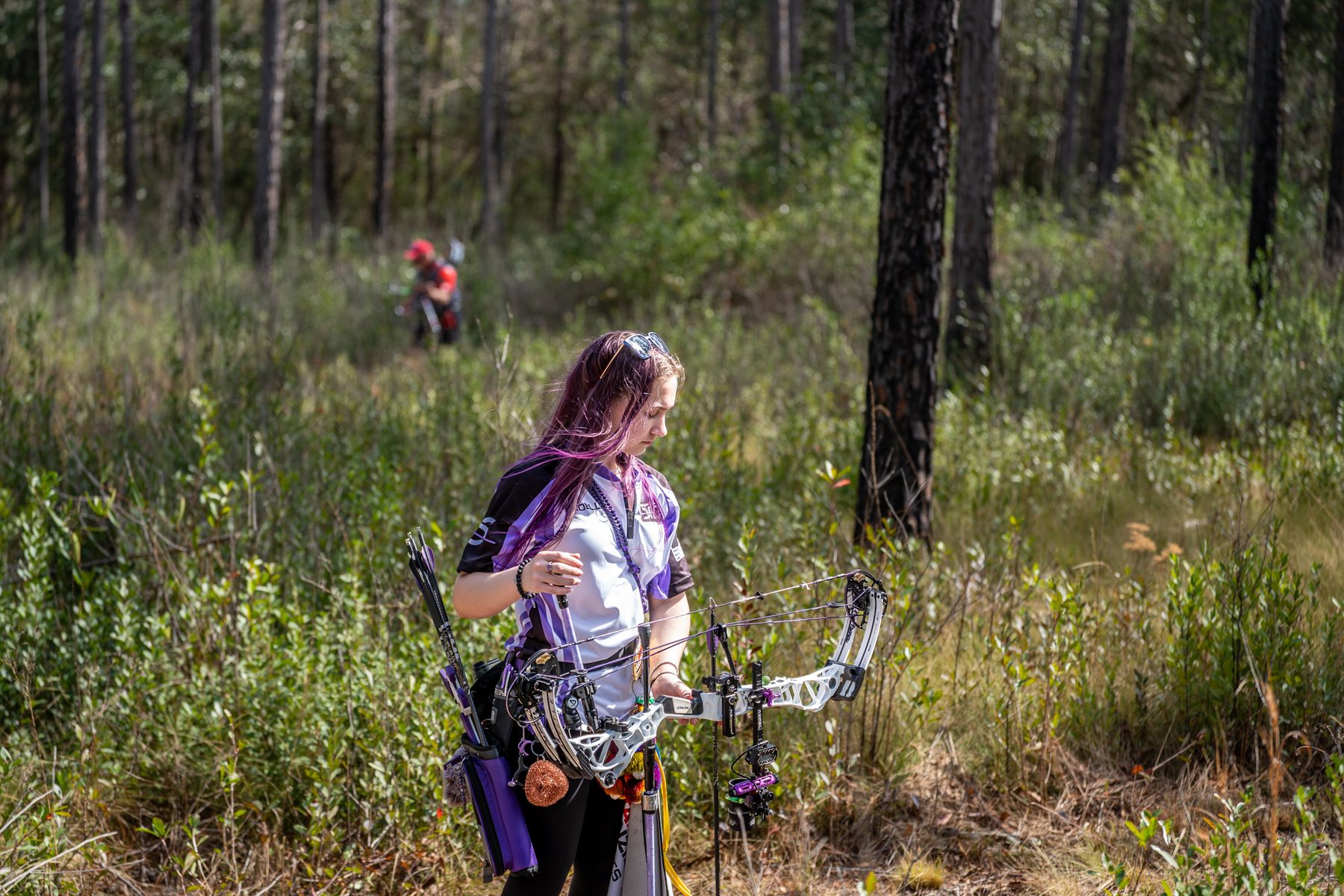
Every archer at SAA develops a personal pre-shot routine — a defined sequence of thought and action that begins before the arrow is nocked and ends at the moment of release. The routine is not a superstition or a comfort ritual. It is the mechanism that brings the subconscious into a consistent ready state. When the routine runs the same way every time, the shot it produces is more consistent every time.
Athletes are taught, consistently and deliberately, to focus on executing the process rather than evaluating the result. A 10-ring hit that came from a broken process is a worse outcome, from a coaching standpoint, than an 8-ring hit from a correctly executed process. Score is a lagging indicator of process quality. Training athletes to measure their performance by process execution rather than score — especially in the early competitive stages — produces faster long-term development and greater mental resilience under pressure.
Blank bale work — shooting at a target with no scoring rings, often at point-blank range — is a central tool in our mental training. Without a score to watch, the conscious mind is freed from result-evaluation and the archer can focus entirely on executing the physical and mental process. This is where shot process is built and where subconscious execution patterns are established. Athletes who resist blank bale work are often the athletes whose mental game breaks down most severely under pressure.
Target panic — the involuntary anticipation of the release that causes archers to flinch, punch, or freeze — is the most common and most damaging mental performance issue in the sport. It is rarely discussed honestly in recreational programs because it requires a systematic remediation approach rather than a quick fix. At SAA, we treat target panic as a subconscious conditioning issue with a defined retraining process. Catching early-stage target panic and correcting it before it becomes entrenched is one of the most important things a coach can do for a young competitive archer’s long-term development.
The mental layer is not an afterthought we add to athletes who “already have their form.” It is developed in parallel with the physical foundation from the beginning — because the habits of the mind are built at the same time as the habits of the body, and trying to retrofit a mental process onto an archer who has already built a form-only framework is significantly harder than building both together from the start.
Competitive Application — Training the Way You Compete
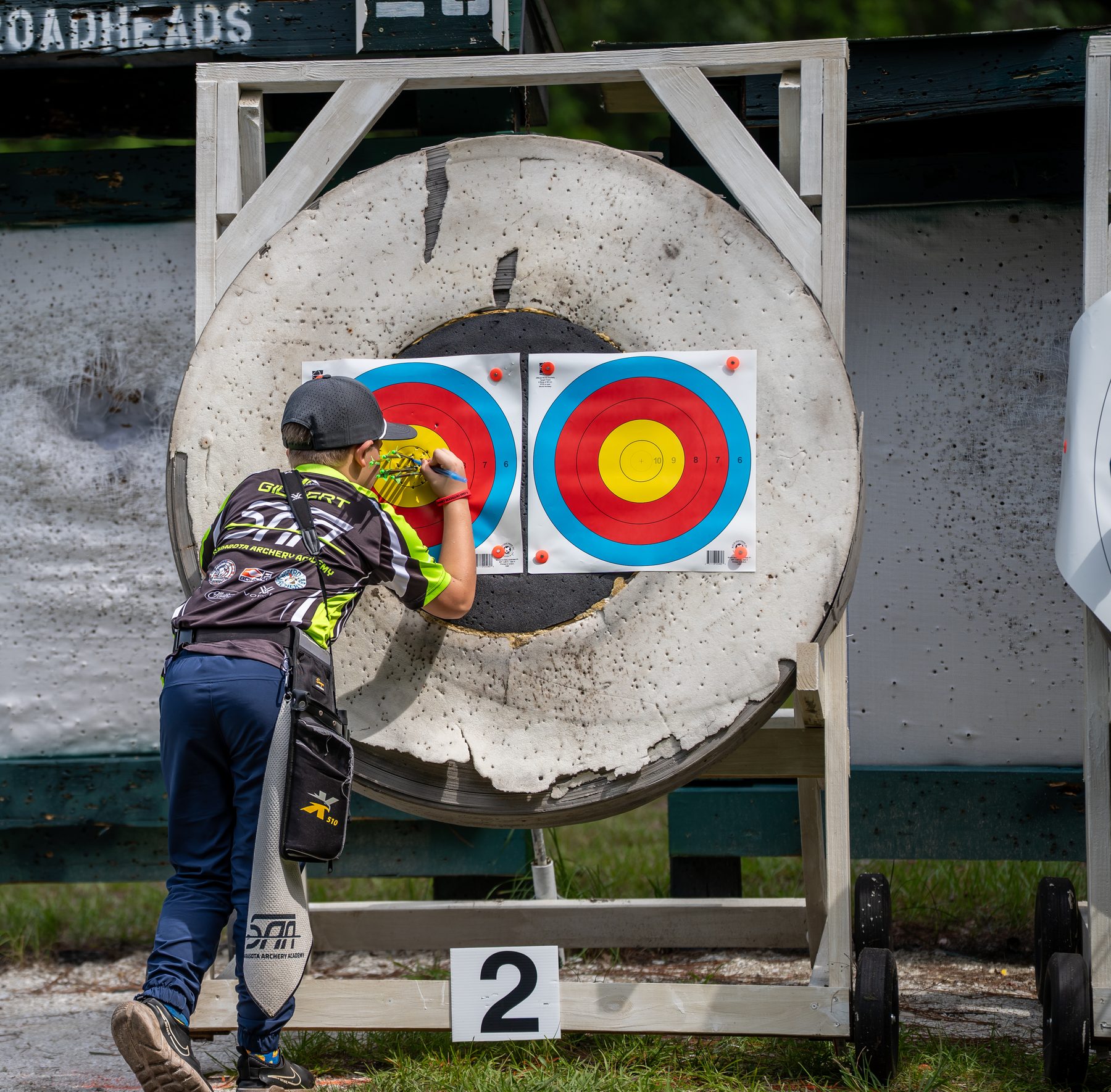
The third layer of our methodology is specific to what competitive archery actually demands — and it looks different from the first two layers because tournament conditions impose variables that controlled practice does not. Wind, unfamiliar ranges, crowd noise, adjacent competitors, time pressure, scorekeeping, and the weight of accumulated score all affect performance in ways that can only be prepared for by deliberately introducing those variables into training before an athlete faces them in competition.
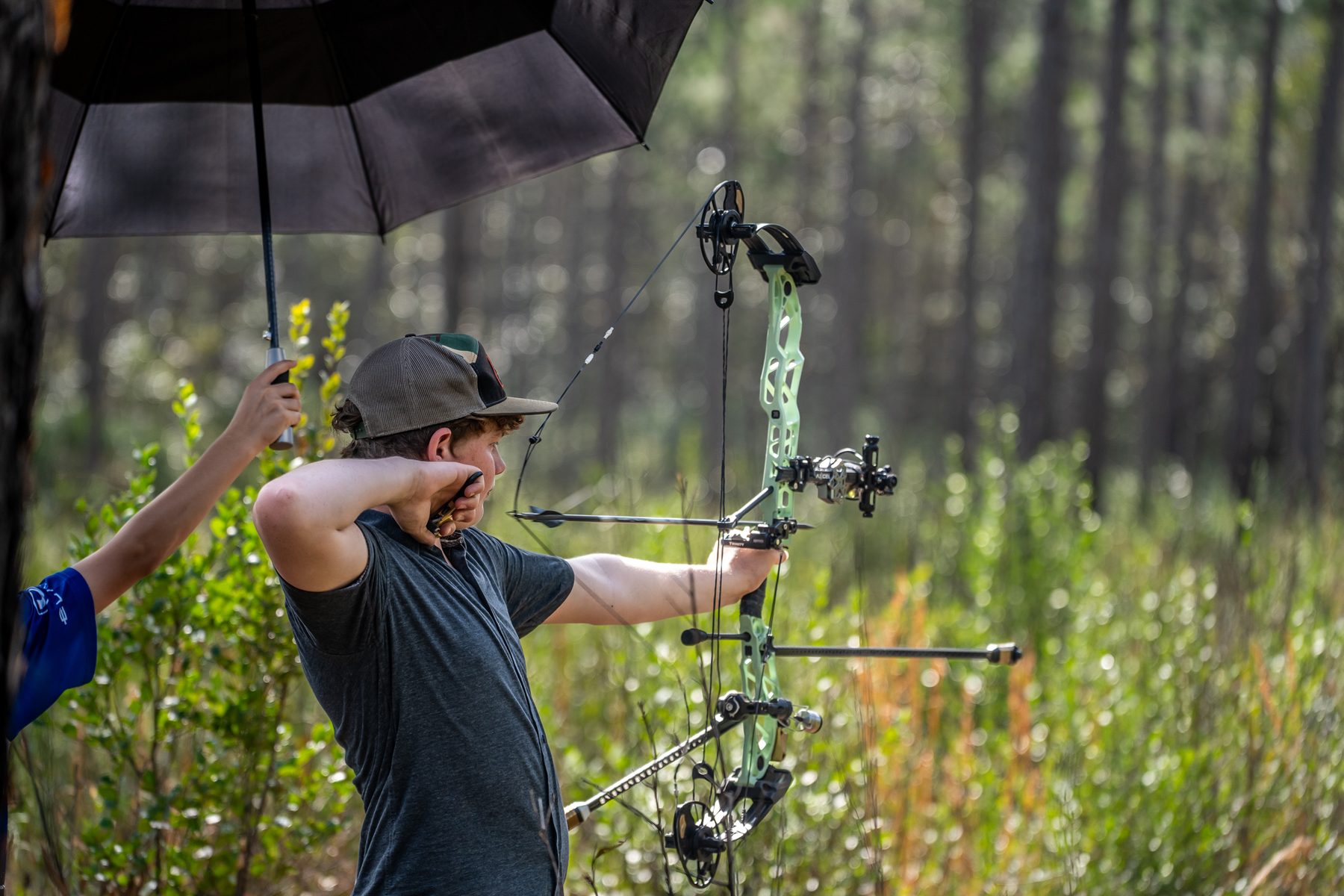
At SAA, we simulate tournament conditions regularly throughout the training year. Scored ends under time pressure. Scoring with an audience. End-of-round scoring procedures practiced exactly as they occur at sanctioned events. Practice at unfamiliar distances and target configurations. These simulations are not decoration — they are the mechanism by which an athlete’s trained process becomes robust enough to survive the conditions that tournaments actually create.
USA Archery vs. ASA 3D — Application Differences
The competitive application layer looks different for our two programs because USA Archery and ASA 3D impose fundamentally different competitive demands.
USA Archery competition is a high-repetition, consistent-distance format where the primary variable is the archer’s own execution quality. Sixty arrows indoors, all at the same distance, all at the same target face. The course doesn’t change. The challenge is sustaining physical and mental consistency across every arrow in the round — particularly late in a round when fatigue sets in and the score is known. X-Ring Program athletes train for this specifically: sustained process under fatigue, late-round focus protocols, and score management strategies that prevent a bad end from becoming a bad round.
ASA 3D competition is a field-judgment format where the course changes at every target. Distances are unmarked — athletes must estimate yardage from variable terrain, angles, and lighting conditions and select the correct aim point before executing the shot. Upper 12’s Program athletes train for field judgment as explicitly as they train for form: range estimation methods, reading animal target anatomy for scoring zone aim points, managing the mental rhythm of a multi-hour outdoor course walk, and the unique challenge of shooting from uphill and downhill angles where form adjustments are required.
Athletes who compete in both programs — and some do — find that the disciplines reinforce each other in interesting ways. The form precision USA Archery demands improves 3D accuracy. The field adaptability ASA 3D demands improves the mental flexibility and problem-solving that USA Archery tournament conditions sometimes require.
Why the Three Layers Must Be Trained Together
The reason most archery programs produce archers who plateau early is that they teach Layer One and call it coaching. Form is taught. The archer shoots well in practice. The archer enters a tournament and their score doesn’t reflect their practice performance. The coach prescribes more form work. Nothing changes.
The athletes at Sarasota Archery Academy who develop fastest are the ones who engage all three layers from early in their training — because those layers interact. The NTS shot sequence provides a physical structure that the mental process can trust. The mental process provides the subconscious execution that makes the physical structure replicable under pressure. The competitive application layer stress-tests both and reveals where the integration breaks down so we can repair it before a tournament does.
This is what we mean when we say we develop athletes rather than archers. An archer hits targets. An athlete executes a process, under any conditions, with any stakes, in any environment — and trusts the result. That is the product of all three layers working together. It is what we are building, at every practice, with every athlete who walks through the door.
Our Methodology at a Glance
The Methodology Is Only as Good as the Athlete Who Applies It.
Tryouts are open to athletes ages 8 and up. We evaluate form potential, coachability, and competitive drive — not prior experience. If the athlete has the drive and the discipline, we have the system. Apply for a tryout and see if you’re a fit.