
Archery Equipment Consultation — The Right Setup for the Right Archer
Physical Size. Strength. Individual Goals. We Start There.
The wrong bow ruins a promising archer. The right bow — fit specifically to an athlete’s draw length, physical strength, and competitive objectives — accelerates everything. Sarasota Archery Academy’s coaching staff provides equipment consultation as part of athlete development. This page explains how we think about equipment and why it matters more than most families realize.
Sarasota Archery Academy’s equipment consultation is built on three measurements: (1) draw length (the archer’s physical size), (2) draw weight (current usable back-muscle strength), and (3) discipline and competitive goals (USA Archery, ASA 3D, or both). From there we recommend bow style (recurve, compound, barebow), arrow spine and weight, sight and stabilizer setup, and release aid or finger tab. Consultation is included as part of athlete development for SAA members.
The Most Common Way Families Waste Money on Archery Equipment — and How We Help You Avoid It
There is a predictable pattern in how families without coaching guidance buy archery equipment. They walk into a sporting goods store or browse online, ask for something appropriate for a youth archer, and walk out with a bow that was selected based on price or what was available — not based on the specific physical measurements and competitive goals of the archer who will use it. That bow often creates problems that are indistinguishable from form problems. The archer struggles. The coach suspects form. More form work is prescribed. The struggles continue — because the root cause was never form. It was fit.
Archery equipment that doesn’t fit the archer will actively work against correct form development. A bow with too much draw weight forces an arm-driven shot because the back muscles aren’t strong enough yet to move the heavier draw. A bow with the wrong draw length creates anchor inconsistency that cannot be corrected by coaching because the equipment’s geometry is fighting the correction. A bow style mismatched to the athlete’s competitive goals starts a development path that has to be restarted when the athlete reaches serious competition levels.
This is why Sarasota Archery Academy includes equipment consultation as part of our athlete development process — not as an upsell, not as a revenue stream, but because it is integral to good coaching. An athlete can only be coached on the equipment they have. If the equipment is wrong for them, coaching is working uphill against a preventable problem.
Three Variables. Every Consultation. No Exceptions.
Every equipment consultation at SAA begins with the same three assessments — because every equipment recommendation is built on them. There is no shortcut around this process, and any equipment recommendation that doesn’t start here is not a proper recommendation. It’s a guess.
Draw length is the single most important physical measurement in archery equipment selection. It determines how far the string is pulled back to anchor, which determines where the bow’s geometry places the archer’s hand, elbow, and shoulder at full draw. A draw length that is too long forces the archer into an extended, unstable anchor and creates shoulder problems. A draw length that is too short puts the archer in a cramped position that prevents proper back muscle engagement.
We measure draw length using multiple methods: wingspan divided by 2.5 (the standard approximation), plus direct measurement at the anchor position using a draw-length arrow. For youth athletes who are still growing, we account for growth trajectory and select equipment or configuration that accommodates a realistic growth range without constant replacement.
Compound bows have adjustable draw length ranges — typically 3–5 inches of adjustment per module or cam setting. Recurve bows accommodate draw length through limb length and riser length selection rather than mechanical adjustment. We guide families on which configuration is appropriate for both the archer’s current measurements and their likely competitive trajectory.
Draw weight — the amount of force required to draw the bow to full draw — is where the most damaging equipment mistakes happen. Parents frequently select bows with higher draw weights than their child can handle, under the assumption that the archer will “grow into it” or that more poundage produces better performance. Both assumptions are wrong and cause measurable harm to development.
An archer cannot execute correct NTS form on a bow they are struggling to draw. The attempt to draw an over-weighted bow forces compensations — rolling the shoulder, breaking at the elbow, using the arm instead of the back — that become embedded habits. Those habits are then present on any bow, including properly weighted ones, because the motor pattern has been trained incorrectly. This is one of the most common sources of form problems we diagnose in new athletes who trained elsewhere.
Our assessment evaluates the archer’s current usable back-muscle strength — not their maximum force draw, which anyone can do by muscling through with their arms — and identifies a draw weight range that allows correct form execution with appropriate challenge. For youth athletes, this typically means starting significantly lighter than parents expect, with planned progression as the athlete’s back strength develops through correct training.
For competition: USA Archery youth divisions have no minimum draw weight requirements for indoor and outdoor events. ASA 3D has division-specific regulations. We factor competition requirements into draw weight guidance for athletes who will be competing immediately, while still prioritizing correct form over meeting minimum weights on a rushed timeline.
The right equipment depends entirely on what the archer is trying to accomplish. A recurve bow configured for USA Archery indoor competition is not the right tool for ASA 3D field archery. A compound bow optimized for 3D yardage estimation is set up differently from one optimized for USA Archery target rounds. An athlete planning to compete in both disciplines needs guidance on whether one bow can serve both or whether program-specific setups are warranted.
We also account for competitive trajectory. An athlete who intends to pursue USA Archery’s Olympic development pathway has a specific equipment progression that should be started correctly — including bow style choices (barebow, recurve, compound) that have long-term implications. An athlete focused on ASA 3D Shooter of the Year rankings is in a different equipment context. A newer athlete who hasn’t yet determined their discipline focus needs different guidance than an athlete who is certain of their path.
Budget is part of this conversation. We do not recommend the most expensive option by default. We identify the best-value equipment for each athlete’s current stage, growth trajectory, and competitive goals — including used equipment when it’s appropriate and available. We work with the families who join SAA to find equipment solutions that serve the athlete without creating financial strain on the program investment they’re already making.
What Equipment Looks Like for Each SAA Program
X-Ring Program — USA Archery
USA Archery target competition is contested across three bow styles — barebow, recurve, and compound — each with separate competitive divisions at state and national events. Most youth athletes entering USA Archery competitive programs begin with compound, which has a let-off mechanism that reduces the holding weight significantly (typically 65–80% reduction from peak draw weight). This makes it physically more accessible for younger or lower-strength athletes, and the division structure in youth compound competition is robust at the state level.
Recurve is the Olympic style and the discipline most directly connected to USA Archery’s highest-level development pathway. Recurve requires holding the full draw weight at anchor, which demands more back strength than compound. For athletes with Olympic development aspirations, recurve is the appropriate long-term discipline — but starting on compound while building back strength and NTS fundamentals is a legitimate and common developmental approach.
Barebow is recurve without the sight — the archer aims using the arrow tip or string picture. It is a growing competitive division with strong state and national competition. Athletes drawn to the added challenge of sight-free aiming find barebow uniquely rewarding. We include barebow guidance in consultations for athletes who express interest in it.
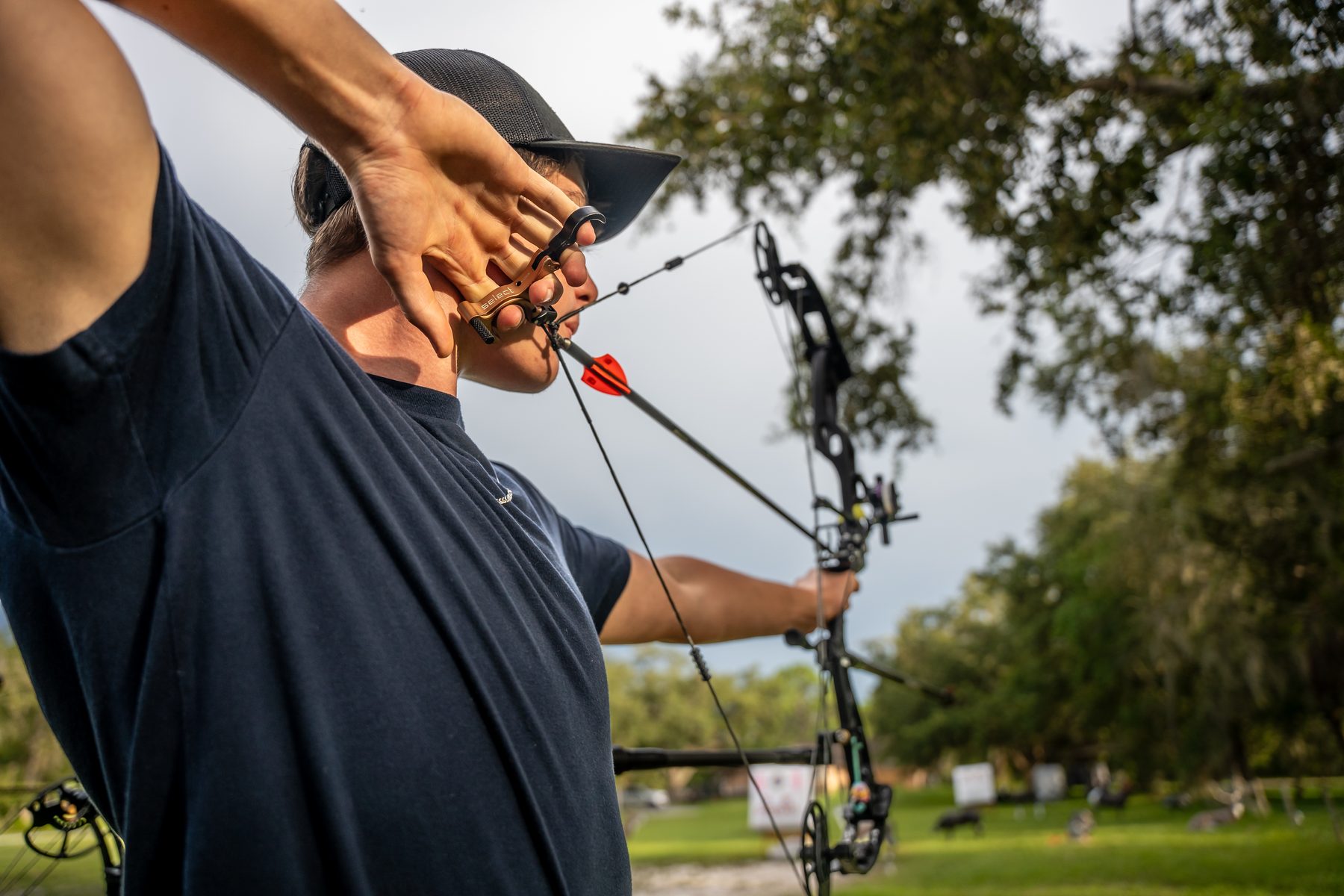
Key components we advise on for USA Archery setups: bow (riser, limbs, or compound unit), arrow selection and spine, arrow rest type, sight configuration, stabilizer setup, and release aid (compound) or finger tab (recurve/barebow). We advise on sponsors whose equipment our athletes have experience with — including our presenting sponsor The Outdoor Group brand family, which includes Elite Archery (compound), CBE sights, Altra arrows, and Scott releases — as well as other manufacturers where appropriate for the athlete.
Upper 12’s Program — ASA 3D
ASA 3D archery is almost exclusively contested with compound bows, and the equipment optimization priorities differ from USA Archery target competition in important ways. ASA 3D archers are shooting at varying distances on outdoor courses — which means the bow setup must be optimized for consistent point-of-impact across a range of yardages rather than for precision at a single fixed distance.
Arrow speed matters more in ASA 3D than in indoor USA Archery target competition, because a faster arrow has a flatter trajectory — meaning yardage estimation errors produce smaller vertical misses. This affects bow selection (peak draw weight recommendations are typically higher for 3D than for indoor target), arrow selection (spine, weight, and length for trajectory optimization), and sight configuration (single-pin adjustable vs. multi-pin fixed).
ASA division structures also have equipment regulations that vary by division — including peep sight size restrictions, maximum draw weight rules, and sight restrictions in some divisions. We ensure that equipment recommendations for Upper 12’s athletes are within legal specifications for the divisions they will compete in, and we advise on division selection based on the athlete’s current equipment and competitive goals.
What Our Equipment Consultation Covers
Archery Equipment Consultation — What Families Ask
The Right Equipment Changes Everything. We’ll Help You Find It.
Equipment consultation is part of the SAA athlete development process. Contact us to ask questions about equipment before a tryout, or apply for a tryout and let the coaching staff assess your athlete’s setup as part of the evaluation.